
Capsule vs. Borden pressure gauge: difference in design and mechanism?


- Introduction to Pressure Gauges: Overview and Importance
- Design Differences Between Bourdon and Capsule Gauges
- Mechanism of Operation: How Each Gauge Works
- Pressure Measurement Ranges and Applications
- Materials and Construction: Durability and Suitability
- Accuracy and Precision: Comparing Measurement Reliability
- Specific Applications: Where Each Gauge Excels
- Maintenance and Calibration of Pressure Gauges
- Cost and Availability: Economic Considerations
- Conclusion: Choosing the Right Pressure Gauge
Introduction to Pressure Gauges: Overview and Importance
Pressure gauges play a pivotal role in various industrial and commercial settings by providing crucial pressure measurements. These instruments ensure safety, efficiency, and accuracy in processes where pressure monitoring is vital. Among the most common types are the Bourdon and capsule type pressure gauges. Understanding their design and operational differences is key for selecting the right gauge for specific applications.
Design Differences Between Bourdon and Capsule Gauges
Structure of Bourdon Gauges: Curved Tubes
Bourdon pressure gauges are characterized by their use of a curved tube, typically C-shaped or spiral-shaped. This tube straightens under pressure, resulting in movement that is registered by a pointer on a dial. The design allows Bourdon gauges to measure a wide range of pressures, from as low as 0.6 bar to as high as 1600 bar.
Design of Capsule Gauges: Corrugated Diaphragms
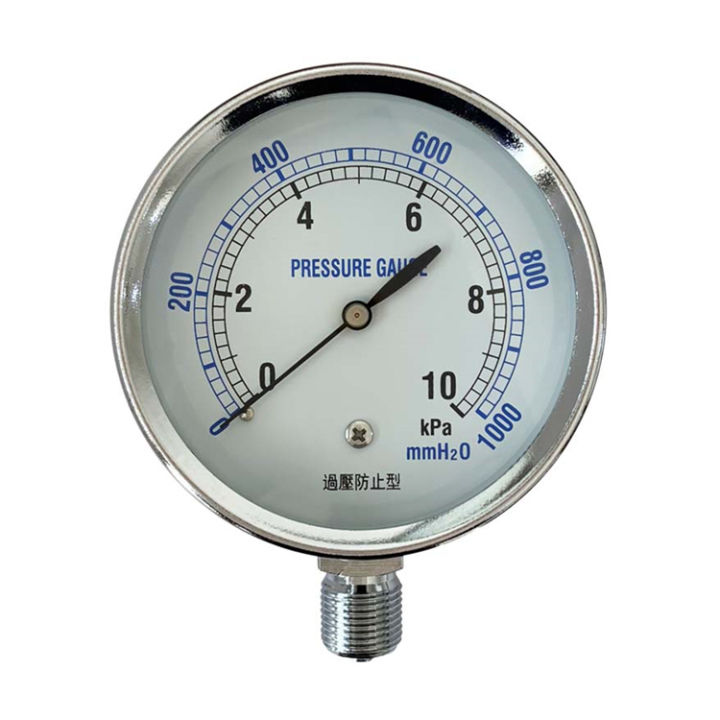
Capsule type pressure gauges, in contrast, utilize two corrugated diaphragms joined to form a capsule. These are designed specifically to measure low pressures, usually between 2.5 mbar to 600 mbar. The compact design and high sensitivity make them ideal for applications requiring precision in low-pressure environments.
Mechanism of Operation: How Each Gauge Works
Pressure-Sensing Mechanics in Bourdon Gauges
Bourdon gauges operate on the principle that a curved tube tends to straighten when pressurized. The pressure causes the tube to straighten, with the free end moving proportionally. This movement is transferred via linkages and gears to a pointer, which moves over a calibrated dial to indicate the pressure.
Pressure-Sensing Mechanics in Capsule Gauges
In capsule type pressure gauges, the pressure change causes the capsule to either expand or contract. This movement is transferred directly to a pointer, providing a measurement on the gauge's dial. This simple mechanism allows for highly accurate readings in low-pressure applications. The gauge's design minimizes mechanical friction, contributing to its precision.
Pressure Measurement Ranges and Applications
Bourdon Gauges: Wide Range Applications
Bourdon gauges are versatile and suitable for a vast range of pressures, making them applicable in industries such as oil & gas, petrochemical, and hydraulic systems. Their robust design can handle higher pressures and challenging environments, offering ranges from vacuum conditions up to 1600 bar.
Capsule Gauges: Specialized for Low Pressure
The capsule type pressure gauge is unmatched in its ability to measure low-pressure ranges precisely. It's particularly beneficial in applications like HVAC systems, barometers, and in laboratories, where precise atmospheric or gas pressure readings are necessary. These gauges are engineered for high sensitivity and precision in readings.
Materials and Construction: Durability and Suitability
The construction materials used in both Bourdon and capsule gauges greatly affect their durability and suitability in different conditions. Bourdon gauges often feature stainless steel or phosphor bronze tubes ideal for corrosive environments. Capsule type pressure gauges typically use stainless steel or bronze for the diaphragms, with housings made from stainless steel or aluminum to ensure durability in various settings.
Accuracy and Precision: Comparing Measurement Reliability
Capsule gauges are renowned for their high accuracy, especially in low-pressure applications where precision is critical. They offer accuracy levels of up to 0.1% of the full scale. Meanwhile, Bourdon gauges are reliable across broader pressure ranges but sacrificing some precision in low-pressure scenarios, typically showing accuracy levels between 0.5% to 2% of full scale.
Specific Applications: Where Each Gauge Excels
Industrial and Commercial Uses of Bourdon Gauges
Bourdon gauges excel in industries requiring robust and reliable pressure measurement tools. They are indispensable in scenarios involving high-pressure steam, water, air, and other non-corrosive fluids. Their capacity to withstand high pressures and temperatures makes them a preferable choice in heavy industries.
Specialized Applications for Capsule Gauges
Capsule type pressure gauges are essential in applications where low pressure and high sensitivity are required. They are extensively used in HVAC systems to monitor air pressure, in meteorological instruments to measure atmospheric pressure, and in various medical devices where low-pressure measurement is crucial.
Maintenance and Calibration of Pressure Gauges
Proper maintenance and regular calibration are vital to ensure the accuracy and longevity of both Bourdon and capsule type pressure gauges. Regular inspection for wear and tear, cleaning, and recalibrating are recommended practices. Calibration should be conducted using standard procedures, typically at intervals recommended by manufacturers or based on usage conditions, ensuring the gauges remain accurate and efficient.
Cost and Availability: Economic Considerations
When considering the purchase of pressure gauges, cost and availability are important factors. Bourdon gauges are generally more affordable due to their widespread use and availability in various models. The capsule type pressure gauge, while potentially more costly due to its specialized applications and precision, can be sourced from dedicated capsule type pressure gauge manufacturers, suppliers, and factories offering wholesale options for bulk purchases.
Conclusion: Choosing the Right Pressure Gauge
When choosing between a Bourdon and a capsule type pressure gauge, several factors must be considered: the pressure range required, accuracy needs, application environment, and budget. Each gauge type has its advantages, and understanding these differences ensures that the most appropriate choice is made for the intended application. Consulting with a reliable capsule type pressure gauge supplier or manufacturer can provide further insights tailored to specific needs.
Guanshan instruments is a professional China pressure gauge manufacturer, offering various customised production services, you can choose us for any questions you may have, we will sincerely answer for you!
 Privacy settings