
What is the typical range of pressure that a capsule pressure gauge can measure?

- Introduction to Capsule Pressure Gauges
- Typical Pressure Measurement Ranges
- Construction and Design of Capsule Gauges
- Working Mechanism of Capsule Gauges
- Application Areas for Capsule Gauges
- Accuracy and Sensitivity Considerations
- Limitations and Challenges
- Types of Capsule Gauges
- Safety and Overpressure Features
- Selection and Usage Tips
- Guanshan Instruments Provide Solutions
Introduction to Capsule Pressure Gauges
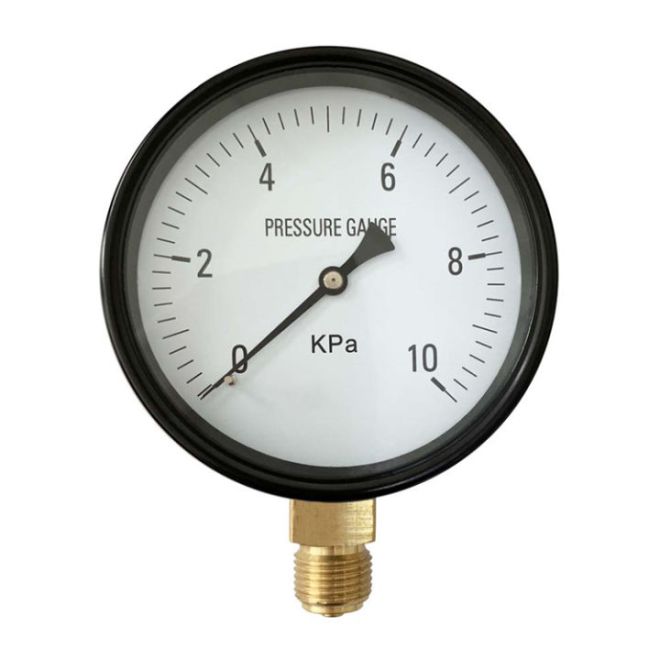
Capsule pressure gauges are specialized instruments designed to measure very low pressures with high accuracy. They are used in a variety of industrial settings to monitor and control gaseous media, particularly in environments where standard gauges may not provide the required sensitivity. As a professional in the field, it's crucial to understand the typical range these gauges can measure and how their design contributes to their capability.
Typical Pressure Measurement Ranges
Standard Measurement Ranges
Capsule pressure gauges typically cover a range from as low as 16 mbar to 600 mbar. These instruments are particularly useful for detecting pressure changes in low-pressure environments, such as those found in vacuum systems or pneumatic applications.
Extended Range Capabilities
While the standard range is 16 to 600 mbar, certain models can measure pressures as low as 1 inch of water column (approximately 2.5 mbar or 0.036 psi), providing added versatility in applications requiring precise pressure readings at extremely low levels.
Construction and Design of Capsule Gauges
Structure and Materials
These gauges are constructed using two corrugated discs, typically made of brass or stainless steel, which are fused together to form a circular capsule. The choice of materials depends on the application requirements, with stainless steel being preferred for more aggressive media.
Gauge Mechanism
The interior mechanism of the capsule gauge is highly sensitive. Any change in pressure causes the capsule to expand or contract, with the resulting movement being conveyed through a pinion mechanism to the dial indicator.
Working Mechanism of Capsule Gauges
Pressure Sensing and Indication
The principle of operation involves the deformation of the capsule when pressure is applied. This deformation is mechanically transmitted to the movement and indicator mechanism, converting linear displacement into a rotational movement readable on the gauge’s scale.
Precision in Low-Pressure Applications
The ability to measure small pressure changes with high accuracy, often up to ±1.0% of the span, makes capsule pressure gauges indispensable in specific industrial applications where precision is critical.
Application Areas for Capsule Gauges
Industry Utilization
- Medical equipment
- HVAC systems
- Oil and gas industry
- Environmental technology
These gauges are also prevalent in applications involving fan and blower monitoring, filter monitoring, and overpressure monitoring in clean rooms.
Specific Use Cases
Capsule pressure gauges are well-suited for use in vacuum pumps, medical suction devices, and gas burners where precise pressure control is mandatory.
Accuracy and Sensitivity Considerations
Factors Affecting Accuracy
The accuracy of a capsule pressure gauge is influenced by its nominal size and the quality of its mechanical components. The larger the disc surface area, the more sensitive the gauge is to pressure changes.
Importance of Sensitivity
For low pressure ranges, sensitivity is paramount. The gauges are built to handle even minimal pressure fluctuations, ensuring reliable measurements that are crucial for process control and safety.
Limitations and Challenges
Material Limitations
Low-pressure capsule gauges are generally suitable for dry gaseous media only, as liquid media can introduce hydrostatic loads, causing false readings.
Impact of External Factors
Capsule pressure gauges can be sensitive to vibrations and pulsations from the measured medium, which can affect their performance if not properly managed.
Types of Capsule Gauges
Variety Based on Design and Application
There are several types of capsule pressure gauges, including those with vertical and perpendicular capsule elements, each offering different benefits in terms of overpressure safety and sensitivity.
Safety and Overpressure Features
Overpressure Protection
Certain models offer overpressure safety ratings up to 50 times the full scale, enhancing their utility in environments where pressure surges may occur.
Design Features for Safety
The housing and supporting structure of the capsule provide robust protection against overpressure, while materials like stainless steel enhance the gauge's durability in aggressive environments.
Selection and Usage Tips
Choosing the Right Gauge
When selecting a capsule pressure gauge, consider factors like the required measurement range, the nature of the media, and the environmental conditions.
Proper Use for Longevity
Ensuring proper installation and regular maintenance of the gauge can extend its life and maintain its accuracy, which is essential for suppliers and manufacturers focusing on quality assurance.
Guanshan Instruments Provide Solutions
Guanshan Instruments offers comprehensive solutions for capsule pressure gauge applications. With a focus on precision and reliability, we cater to wholesale, manufacturer, and supplier needs by offering a range of gauges designed to withstand harsh conditions while delivering accurate measurements. Our expert team is dedicated to helping you select the right equipment for your specific applications, ensuring operational efficiency and safety.
User hot search: capsule pressure gauge working principle
 Privacy settings