
Oil Filled vs Dry Pressure Gauge Comparison

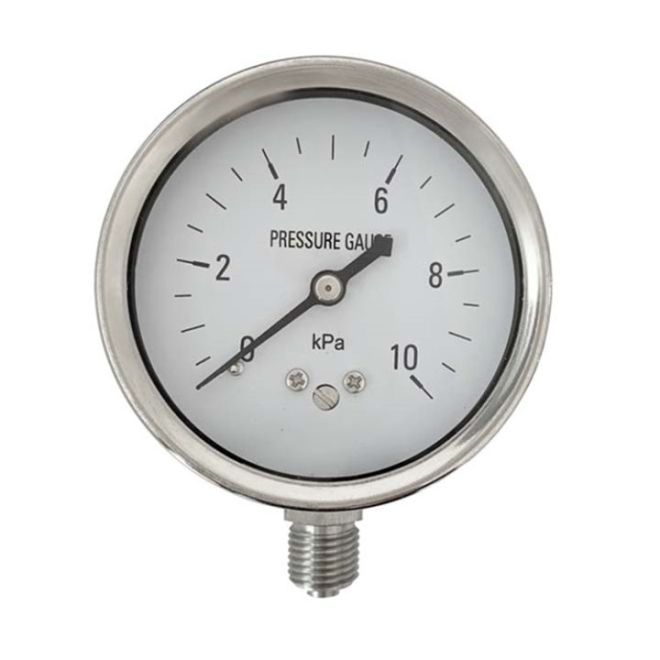
- ⚙️ Basic Working Principles of Oil Filled and Dry Pressure Gauges
- 🔍 Accuracy, Response Speed, and Needle Stability in Different Conditions
- 🌡️ Performance Under Vibration, Pulsation, and Extreme Temperature Environments
- 🧰 Installation, Maintenance, and Service Life Considerations for Both Gauge Types
- 🏭 Application Scenarios and Why Choose Guanshan Instruments Pressure Gauges
- Conclusion
- Frequently Asked Questions about oil filled pressure gauge
Your pressure gauge keeps fogging, buzzing, or dying at the worst moment, and now you’re stuck wondering, “Oil filled or dry—which one won’t betray me when the line pressure hits the fan?”
To fix this, match gauge type to your environment: oil filled for vibration and harsh conditions, dry for clean, stable setups. For clear guidance on selection and safety, see this ASME performance standard here.
⚙️ Basic Working Principles of Oil Filled and Dry Pressure Gauges
Both oil filled and dry pressure gauges use an elastic element, usually a Bourdon tube, that bends when pressure acts on it. The movement drives the pointer across the dial scale.
Oil filled gauges add a liquid fill (often glycerin or silicone) that protects internal parts from vibration, shock, and moisture, while dry gauges remain unfilled and simpler in design.
1. Structure of Dry Pressure Gauges
Dry gauges have a clear case, pointer, dial, and Bourdon tube or diaphragm. They suit clean, stable systems with limited vibration or temperature shock.
- Low cost and simple design
- Easy to inspect visually
- Good for indoor, non-corrosive media
2. Structure of Oil Filled Pressure Gauges
Oil filled gauges include the same measuring element, but the case is filled with oil to damp movement and protect parts from harsh conditions.
- Oil cushions the pointer movement
- Better sealing against moisture
- Longer life under vibration
3. Common Measuring Elements
Most industrial gauges use Bourdon tubes, capsules, or diaphragms. Diaphragm types work better for viscous, crystallizing, or dirty media.
| Element | Best For |
|---|---|
| Bourdon tube | General gas and liquid |
| Diaphragm | Slurry, corrosive, or sticky media |
4. Typical Products and Standards
For stainless steel processes, a PG-SS-01 Stainless Steel Pressure Gauge - Pressure Gauge offers good corrosion resistance. For chemical or sanitary media, a dedicated Diaphragm pressure gauge isolates the process fluid from the measuring system.
🔍 Accuracy, Response Speed, and Needle Stability in Different Conditions
Oil filled gauges keep the pointer steady and readable when shocks, pulsation, or vibration would cause a dry gauge to flutter and wear out faster.
Dry gauges respond quickly and suit simple, stable applications, while oil filled models offer stable readings and better long-term accuracy in demanding environments.
1. Comparative Accuracy Levels
Both types can reach similar accuracy classes, but oil filled gauges maintain accuracy longer in tough service by reducing wear on moving parts.
| Gauge Type | Typical Accuracy |
|---|---|
| Dry, general type | ±1.6% to ±2.5% |
| Oil filled, industrial | ±1.0% to ±1.6% |
2. Response Speed and Damping
Dry gauges respond very quickly, but the pointer may vibrate. Oil filled gauges respond slightly slower, yet show smoother, more stable readings.
- Dry: fastest response
- Oil filled: controlled damping
3. Needle Stability Comparison (Bar Chart)
The chart below compares pointer stability of oil filled and dry gauges under different vibration levels, helping you choose the right design for your system.
4. Reading Clarity in Real-World Use
Oil filled gauges stay clear and steady outdoors or on mobile equipment. Dry gauges work well on stable lines, panels, and indoor utilities.
🌡️ Performance Under Vibration, Pulsation, and Extreme Temperature Environments
Oil filled gauges handle strong vibration, pulsation, and temperature swings much better, while dry gauges fit mild, steady conditions at moderate temperatures.
1. Vibration and Shock Resistance
Oil fill absorbs mechanical shock, preventing pointer bounce and internal damage. Dry gauges can fatigue faster when mounted on pumps or compressors.
- Oil filled: best for mobile or vibrating equipment
- Dry: use only where motion is low
2. Pulsating Pressure Protection
Oil filled designs, often paired with snubbers, smooth pressure spikes, protecting the Bourdon tube from rapid cycling and early failure.
3. Temperature Limits and Media Effects
Dry gauges are simple but may fog or freeze. Oil filled gauges resist moisture and temperature shock, but you must choose oil that matches the temperature range.
🧰 Installation, Maintenance, and Service Life Considerations for Both Gauge Types
Correct mounting, scale range, and material selection are key for safe readings and long life, whether you choose oil filled or dry gauges.
Regular checks and simple cleaning help keep gauges accurate and reliable, improving plant safety and lowering replacement costs.
1. Installation Best Practices
Install gauges upright, near eye level, and away from strong vibration when possible. Use proper seals and avoid over-tightening the threads.
- Select range 2× your normal working pressure
- Use siphons for steam and impulse lines for remote mounting
2. Routine Maintenance Steps
Inspect lenses, cases, and pointers often. Replace damaged units quickly. For oil filled gauges, check for leaks and yellowed or cloudy fill fluid.
3. Expected Service Life
Oil filled gauges generally last longer in harsh service. Dry gauges can offer many years of use when applied in clean, stable conditions.
🏭 Application Scenarios and Why Choose Guanshan Instruments Pressure Gauges
From water systems to petrochemical lines, the right pressure gauge protects equipment, improves control, and prevents costly unplanned shutdowns.
Guanshan Instruments offers optimized designs, full material options, and strict quality control to match demanding global industrial standards.
1. Typical Uses for Dry and Oil Filled Gauges
Dry gauges fit HVAC, air compressors, and simple hydraulic or water systems. Oil filled types suit pumps, heavy machinery, and outdoor skid units.
| Application | Preferred Gauge |
|---|---|
| Indoor utilities | Dry |
| High vibration | Oil filled |
| Corrosive process | Stainless, often oil filled |
2. Product Examples from Guanshan
For standard systems, the General pressure gauge-Chinese type offers reliable and economical monitoring. More complex processes can use stainless or diaphragm models for higher protection.
3. Why Partner with Guanshan Instruments
Guanshan provides strong engineering support, flexible customization, and stable supply, helping you select the best oil filled or dry gauge for each line.
Conclusion
Oil filled pressure gauges give better stability, durability, and readability in vibration, pulsation, or outdoor conditions, while dry gauges remain cost-effective for clean, stable lines.
By matching gauge type, material, and accuracy to your process, you improve safety, reduce downtime, and extend the service life of sensitive equipment.
Frequently Asked Questions about oil filled pressure gauge
1. When should I choose an oil filled pressure gauge?
Use an oil filled gauge when your system has high vibration, pulsating pressure, outdoor exposure, or when you need more stable long-term readings.
2. Can I mount an oil filled gauge in any position?
Most should be mounted upright for correct readings. If you need other positions, ask for models specifically designed and calibrated for that orientation.
3. What oil is used inside oil filled gauges?
Common fill fluids are glycerin and silicone oil. Silicone handles wider temperature ranges, while glycerin works well for many general industrial services.
4. Do oil filled gauges need regular refilling?
No, they are normally sealed. If you see a level drop or leakage, the gauge is damaged and should usually be replaced, not just refilled.
5. Are oil filled gauges suitable for all media?
They suit many gases and liquids, but you must check compatibility. For aggressive or dirty media, consider a diaphragm seal or diaphragm gauge design.
 Privacy settings