

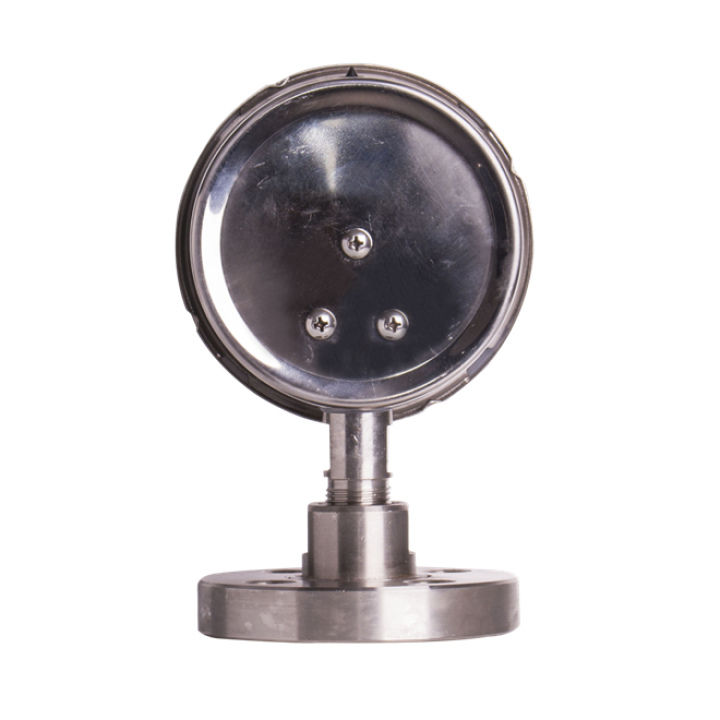
Manufacturer Coating Gauge Diaphragm Pressure Instrument
Product Details
| Nominal Size | 100 mm |
|---|---|
| Accuracy Class | 1.6 |
| Scale Range | -1~40 bar |
| Permissible Temperature | Ambient: -20~60℃, Medium: 150℃ |
| Process Connection | S.S 304 |
| Connection Size | Customized |
| Diaphragm Body | S.S 304 or S.S 316L |
| Diaphragm Seal | S.S 316L |
| Case | S.S 304 |
| Bezel | S.S 304 |
| Window | PC |
| Dial | Aluminum (customized logo) |
| Pointer | Aluminum, black |
Common Product Specifications
| Type | Pressure Gauge |
|---|---|
| Material | Stainless Steel |
| Application | Industrial |
Product Manufacturing Process
According to authoritative sources, the manufacturing process of coating gauges involves precision engineering to meet stringent industry standards. It begins with the selection of high-quality materials, ensuring durability and performance. The next step involves precision machining and assembly of components such as the diaphragm and casing. Each gauge undergoes rigorous testing for accuracy and reliability under various conditions. Quality checks encompass both visual inspections and functional tests to ensure compliance with specifications. The process concludes with packaging designed to protect the instrument during transportation. This robust process guarantees that each product meets the high expectations of our clients.
Product Application Scenarios
In industrial settings, precise measurement of coating thickness is pivotal for both quality control and regulatory compliance. Coating gauges are extensively used in industries like automotive, aerospace, and infrastructure, where coating integrity is crucial to product longevity and safety. For instance, in the automotive sector, these gauges ensure optimal paint thickness for corrosion resistance and aesthetic appeal. In aerospace, precise measurements are vital due to strict safety standards, as coatings play a critical role in reducing environmental wear on aircraft components. Such applications highlight the importance of advanced coating gauge technology for manufacturers aiming to maintain competitive advantage.
Product After-Sales Service
We offer comprehensive after-sales support including technical assistance and warranty services. Our experts are available to help with installation, calibration, and troubleshooting. Customers can also benefit from regular maintenance and repair services to ensure their instruments remain in optimal working condition.
Product Transportation
Products are packaged securely to prevent damage during transit. We collaborate with reliable logistics partners to ensure timely and safe delivery worldwide, meeting all international shipping regulations and requirements.
Product Advantages
- High accuracy and reliability
- Durable construction with corrosion-resistant materials
- Customizable options for various applications
- Comprehensive after-sales support
- Competitive pricing without sacrificing quality
Product FAQ
- What substrates can the coating gauge measure?
The manufacturer’s coating gauge is versatile and can measure coatings on both ferrous and non-ferrous substrates, including steel, iron, aluminum, and copper.
- How accurate are the measurements?
The gauge offers high accuracy with a precision class of 1.6, ensuring that measurements are both reliable and repeatable across a range of conditions.
- Is the gauge suitable for outdoor use?
Yes, our diaphragm pressure gauge is designed to withstand various environmental conditions with a permissible ambient temperature range of -20 to 60℃.
- Can the gauge be customized?
Yes, we offer customization options for the connection size and dial logo to suit specific application needs. Please contact our sales team for more details.
- What is the warranty period?
The product comes with a standard warranty period of one year, covering any manufacturing defects encountered during normal operation.
- How often should the gauge be calibrated?
For optimal performance, we recommend calibrating the gauge annually. However, specific requirements may vary based on usage frequency and environmental conditions.
- Is technical support available post-purchase?
Yes, our dedicated technical support team is readily available to assist with any issues, providing guidance on installation, troubleshooting, and maintenance.
- What are the maintenance requirements?
Regular maintenance includes cleaning the device to prevent build-up on the diaphragm and ensuring all connections are secure. Detailed maintenance instructions are provided with the product.
- How does the diaphragm pressure gauge work?
The diaphragm responds to changes in pressure, which is then mechanically transmitted to a pointer on a dial face, providing a visual representation of pressure levels.
- Is the instrument compatible with aggressive media?
The use of S.S 316L in the diaphragm seal makes the gauge suitable for aggressive media, offering enhanced corrosion resistance.
Product Hot Topics
- How digital transformation is enhancing coating gauges
With the advent of digital technology, coating gauges have evolved to feature digital displays, data storage, and connectivity options. These advancements enable more precise measurements and efficient data management, benefiting manufacturers by enhancing productivity and ensuring compliance with stringent industry standards. The integration of digital systems also allows for seamless integration into smart manufacturing environments, paving the way for more automated and connected production processes.
- Importance of maintaining coating thickness in automotive industries
For automotive manufacturers, maintaining optimal coating thickness is crucial to ensure vehicle durability and aesthetic quality. The coating not only serves as a protective barrier against corrosion and environmental damage but also plays a significant role in vehicle appearance. As such, precise measurement of coating thickness through advanced gauges is essential, enabling manufacturers to meet industry standards and customer expectations. By ensuring consistent and accurate measurements, manufacturers can avoid costly reworks and enhance overall product quality.
- Choosing the right coating gauge for your application
Selecting a suitable coating gauge involves understanding your specific measurement needs, including substrate type and coating material. Manufacturers must consider instrument capability and compatibility, ensuring the chosen gauge meets accuracy and range requirements. Additionally, factors such as ease of use, calibration frequency, and after-sales support are crucial in making the right decision. By choosing the right instrument, manufacturers can achieve better quality control and efficiency, ultimately enhancing product reliability and market competitiveness.
- Advancements in diaphragm pressure gauge materials
Modern diaphragm pressure gauges benefit from material advancements, such as the use of stainless steel and advanced polymers, which offer improved durability and chemical resistance. These materials ensure the gauges can withstand harsh operating environments, providing reliable performance and longer service life. By incorporating such materials, manufacturers can produce gauges that are not only robust but also more sensitive and accurate, meeting the demanding requirements of contemporary industrial applications.
- Impact of coating gauges on industrial quality control
Coating gauges play a vital role in industrial quality control by ensuring that coating thickness adheres to specified standards. Accurate measurements prevent potential issues related to insufficient or excessive coatings, such as corrosion or material wastage. Manufacturers rely on these instruments to maintain high quality across production batches, meeting customer expectations and regulatory requirements. As such, investing in reliable coating gauges is an essential part of any quality control strategy, driving efficiency and reducing operational costs.
- Trends in smart coating gauge technology
The rise of smart technology has led to the development of coating gauges with enhanced functionalities, such as wireless connectivity and real-time data analysis. These smart features enable manufacturers to integrate coating measurement seamlessly into automated systems, improving process control and data accuracy. By adopting smart technologies, companies can achieve greater operational efficiencies, ensuring that their products consistently meet quality standards while reducing errors and manual intervention.
- Understanding coating gauge calibration
Regular calibration of coating gauges is crucial to maintaining measurement accuracy and reliability. Calibration involves adjusting the instrument to align with known standards, compensating for any deviations that may occur over time due to wear or environmental factors. By ensuring accurate calibration, manufacturers can avoid measurement errors that could lead to product defects or non-compliance with industry standards. As a result, calibration is an essential practice for maintaining product quality and customer satisfaction.
- The role of coating gauges in sustainability
Coating gauges contribute to sustainability by optimizing material usage and minimizing waste. By ensuring precise application of coatings, manufacturers can reduce the environmental impact associated with excess material usage and reworks. Additionally, accurate measurements help extend product lifespan by enhancing protection against environmental factors, further supporting sustainability goals. As industries increasingly prioritize sustainable practices, the role of coating gauges in achieving these objectives becomes even more significant.
- Future directions in coating gauge development
Looking ahead, the development of coating gauges is likely to focus on greater integration with Industry 4.0 and IoT technologies. Enhanced data analytics, predictive maintenance, and AI-driven insights are expected to revolutionize the way coatings are applied and monitored. These advancements will enable manufacturers to improve precision and efficiency, driving growth and innovation within the industry. As a result, coating gauge development will continue to align with broader technological trends, offering new opportunities for innovation and enhanced performance.
- Comparing different types of coating gauges
When comparing different types of coating gauges, it is important to consider the materials being measured and the specific requirements of the application. Magnetic induction gauges are ideal for ferrous substrates, while eddy current gauges are better suited for non-ferrous materials. Ultrasonic gauges offer versatility across a range of materials and thicknesses. By understanding the advantages and limitations of each type, manufacturers can select the most suitable instrument for their needs, ensuring accurate and reliable measurements across diverse applications.
Image Description
There is no picture description for this product
 Privacy settings