

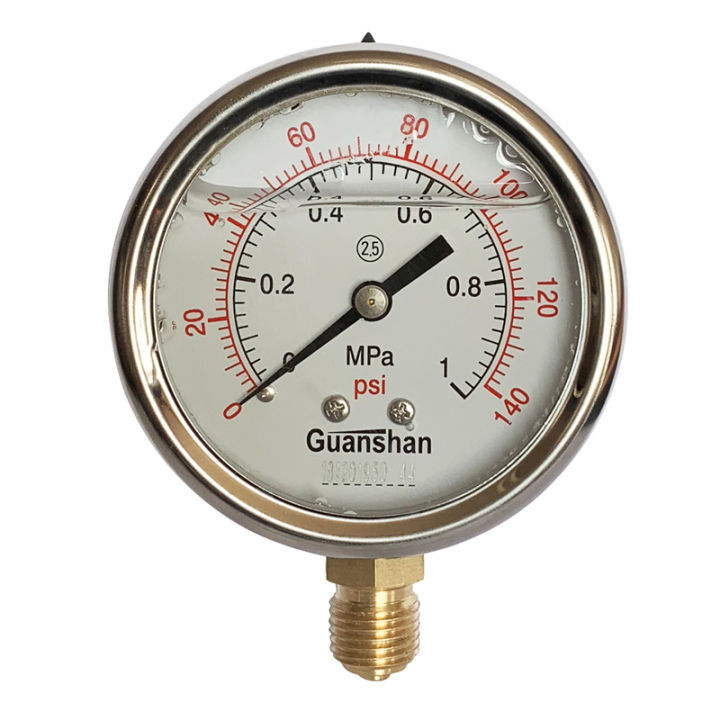
Factory-Grade 2.5 Liquid Filled Pressure Gauge
Product Main Parameters
| Model | PG-L-01 |
|---|---|
| Description | Liquid filled pressure gauge |
| Nominal size in mm | 63 |
| Accuracy class | 1.6 or 2.5 |
| Scale ranges | -1~600bar |
| Permissible temperature | Ambient: -5~60℃, Medium: 60℃ |
| Process connection | Copper alloy |
| Connection thread | 1/4 (G PT NPT) |
| Bourdon tube | Phosphor Bronze |
| Movement | Copper alloy |
| Case | S.S case |
| Bezel | S.S Rolling |
| Window | PC |
| Dial | Aluminum (customized logo) |
| Pointer | Aluminum, black |
Common Product Specifications
| Fill Fluid | Glycerin/Silicone Oil/Halocarbon |
|---|---|
| Application | Industrial, Oil & Gas, Automotive, Chemical Processing |
| Material Compatibility | Copper Alloy and Stainless Steel |
Product Manufacturing Process
The manufacturing of factory-filled pressure gauges follows a rigorous process to ensure precision and reliability. According to authoritative studies, the process begins with the selection of high-quality materials, such as stainless steel and copper alloys, known for their durability and resistance to corrosion. The Bourdon tube, a critical component, is meticulously crafted and tested for elasticity and accuracy in pressure deflection. The casing is then filled with a damping liquid, either glycerin or silicone, depending on the operating temperature range required. This liquid filling is crucial as it absorbs vibrations and pulsations, enhancing the accuracy of readings. The assembly process involves securing the Bourdon tube within the housing, followed by the installation of the dial and pointer, which are calibrated during final quality checks. To ensure longevity and performance, each gauge undergoes rigorous testing under simulated environmental conditions. Proper calibration and zero-point adjustments are imperative to meet industry standards for pressure measurement. The manufacturing process concludes with protective packaging to prevent damage during transportation.
Product Application Scenarios
Factory-filled pressure gauges are integral in various industrial scenarios that demand precise pressure monitoring. Research indicates their efficacy across multiple sectors, such as manufacturing, oil and gas, and chemical processing. In manufacturing, these gauges are crucial for maintaining machinery operation within safe pressure limits, thus preventing costly downtimes. The oil and gas industry relies on them for pipeline monitoring to avert leaks and ensure efficient transportation of materials. In chemical processing, the ability to withstand harsh environments and corrosive substances makes these gauges indispensable for maintaining safety and process integrity. Additionally, automotive industries employ these gauges during testing and quality assurance phases to verify system pressures, ensuring vehicle reliability and performance. Across these sectors, the common theme is the gauge's ability to provide dependable pressure readings despite exposure to dynamic pressure loads, vibrations, and temperature extremes. This versatility is attributed to the liquid filling within the gauge, which not only stabilizes the pointer for accurate readings but also extends the lifespan of the instrument by mitigating mechanical wear.
Product After-Sales Service
Our comprehensive after-sales service for factory-filled pressure gauges ensures customer satisfaction and optimal product performance. We offer technical support and troubleshooting assistance, backed by a team of experienced engineers ready to address any operational concerns. Customers benefit from a warranty that covers manufacturing defects, ensuring peace of mind and investment protection. Additionally, we provide calibration and maintenance services to extend the lifespan and accuracy of the gauges. Our dedicated support staff is available for consultations and guidance on the best practices for installation and use. This commitment to after-sales service underscores our focus on long-term customer relationships and product excellence.
Product Transportation
Transportation of factory-filled pressure gauges is carefully managed to prevent damage and preserve their functionality. Each gauge is securely packed in protective materials that safeguard against impact, vibration, and environmental factors during transit. We collaborate with reputable shipping partners to ensure timely delivery while adhering to international transport regulations for equipment safety. Tracking options are available, providing customers with real-time updates on the status of their orders. In the unlikely event of transportation-related issues, our customer service team is ready to assist, ensuring remedies are swiftly implemented.
Product Advantages
- Vibration Damping: The liquid-filled design reduces needle oscillation for steady readings.
- Environmental Protection: Resistant to contaminants and moisture, ensuring longevity.
- Accuracy: Stable readings critical for safety and efficiency in applications.
- Durability: Withstands harsh industrial conditions, minimizing maintenance.
- Ease of Installation: Standardized connections for compatibility with existing systems.
Product FAQ
- What makes a factory-filled pressure gauge different from a dry gauge? Filled pressure gauges contain a damping fluid, such as glycerin, that absorbs vibrations and pulsations, providing more stable and accurate readings compared to dry gauges. This makes them ideal for dynamic environments where machinery generates significant vibrations.
- How often should I calibrate my factory-filled pressure gauge? It is recommended to calibrate these gauges annually or more frequently if used in critical applications. Regular calibration ensures ongoing accuracy and reliability, meeting industry standards for pressure measurement.
- Can the fill fluid leak from the gauge? Properly maintained and installed gauges are designed to prevent fluid leaks. However, periodic inspections are essential to check for any signs of wear or damage to the casing that could lead to leakage.
- Is glycerin suitable for all environments? Glycerin is suitable for most ambient temperature applications, but for high-temperature or reactive environments, alternative fill fluids like silicone oil or halocarbon may be more appropriate.
- Are these gauges compatible with all media? Factory-filled pressure gauges are suitable for gaseous and liquid media that do not crystallize or react with copper alloy components, ensuring compatibility and longevity.
- What maintenance is required for these gauges? Routine maintenance includes checking for leaks, ensuring the fill fluid level is adequate, and recalibration as necessary. Proper installation and environment-specific configurations also contribute to prolonged service life.
- How does a filled gauge protect against environmental factors? The liquid filling acts as a barrier against contaminants and moisture, reducing the risk of internal component corrosion and mechanical failure, even in harsh outdoor conditions.
- What is the lifespan of a factory-filled pressure gauge? With proper maintenance, these gauges typically have a longer lifespan than dry gauges due to reduced wear from environmental factors and vibrations, resulting in lower replacement frequency.
- How should these gauges be stored? Store the gauges in a dry, stable environment at room temperature. Ensure they are kept away from harsh chemicals or corrosive substances to maintain their integrity and functionality.
- Do factory-filled pressure gauges require special installation tools? No special tools are needed for installation. However, correct handling and adherence to manufacturer guidelines are crucial to prevent damage and ensure optimal performance.
Product Hot Topics
- Why are factory-filled pressure gauges preferred in dynamic environments? The damping fluid in these gauges provides stability, reducing needle oscillation caused by machine vibrations. This stability is crucial in accurate pressure monitoring where rapid pressure changes occur. Industries like manufacturing and oil and gas rely on these gauges to ensure safety and maintain precise control over complex processes. Their robust construction and ability to withstand harsh conditions make them a preferred choice over dry gauges, particularly in environments with high dynamic pressure loads.
- What role do filled pressure gauges play in safety? In industries where maintaining specific pressure levels is essential for safety, factory-filled pressure gauges provide the reliability needed to prevent accidents. The fluid dampens vibrations, ensuring stable readings that are vital for early detection of pressure anomalies. In sectors such as oil and gas or chemical processing, this reliability is crucial in avoiding catastrophic failures. These gauges act as a key element in safety protocols, enabling continuous monitoring and control, thus reducing the risk of dangerous pressure spikes or drops.
- How do filled pressure gauges contribute to cost savings? The longevity of factory-filled pressure gauges means fewer replacements and lower maintenance costs compared to dry gauges. Their ability to withstand harsh industrial conditions reduces the frequency of repairs and downtime associated with gauge failures. Additionally, the accuracy they provide helps maintain optimal pressure levels, improving operational efficiency and resource utilization. In turn, this accuracy translates to cost savings through increased productivity and minimized waste.
- What advancements have been made in the manufacturing of filled pressure gauges? Recent advancements in materials and design have enhanced the durability and precision of factory-filled pressure gauges. Improved manufacturing techniques ensure tighter tolerances, leading to more accurate readings. Additionally, the development of new fill fluids extends the operational temperature range and reduces environmental impact. These advancements contribute to the wider application of filled gauges across more diverse industries, expanding their role in precise pressure monitoring.
- Can factory-filled pressure gauges be customized? Yes, customization is a significant advantage of factory-filled pressure gauges. Manufacturers offer various options such as dial designs, connection types, and fill fluids to meet specific industry requirements. Customization enhances compatibility with existing systems and enables gauges to perform optimally in unique operating conditions. This flexibility ensures that each gauge addresses the specific needs of the application, providing accurate and reliable pressure monitoring.
- Are there environmental concerns associated with filled pressure gauges? The use of non-toxic fill fluids like glycerin minimizes environmental impact. Moreover, the longer lifespan of these gauges means less frequent replacements, reducing waste. Responsible manufacturers ensure adherence to environmental standards in both the production and disposal of these gauges, promoting sustainable practices within the industry.
- What are the challenges in transporting filled pressure gauges? Ensuring safe transport without compromising the gauge’s integrity is crucial. Protective packaging is essential to shield the gauges from mechanical shocks and harsh environmental conditions during transit. Adhering to stringent transport regulations and collaborating with reliable logistics partners are necessary steps to avoid transportation issues and delays.
- How do filled pressure gauges enhance measurement accuracy? The damping effect of the fill fluid minimizes needle fluctuations caused by pulsations and vibrations, resulting in more consistent and accurate readings. This consistency is vital for operations where precise pressure control is necessary for safety, efficiency, and product quality. The accurate readings provided by filled gauges support decision-making processes in real-time, enhancing operational control and safety.
- What industries most benefit from filled pressure gauges? Industries that experience frequent vibrations and pressure fluctuations, such as manufacturing, oil and gas, and chemical processing, benefit greatly from factory-filled pressure gauges. Their ability to maintain accuracy under dynamic conditions makes them indispensable for monitoring and control in these sectors. Additionally, their durability and reduced maintenance needs contribute to their popularity across diverse industrial applications.
- How has technology impacted the evolution of filled pressure gauges? Technological advancements have led to improved materials and design innovations, enhancing the efficiency and reliability of factory-filled pressure gauges. The integration of smart technologies, such as digital displays and remote monitoring capabilities, is expanding their functionality, providing real-time data access and analysis. These technological developments ensure that filled gauges continue to meet the evolving demands of modern industries, offering new opportunities for enhanced performance and operational insights.
Image Description
There is no picture description for this product
 Privacy settings